
To the Teachers Who Shape Our Work: We're Listening
3-min. read
Part of our “Open Book” blog series, Chief Product and Technology Officer Mark Haseltine reflects on how educator feedback shapes everything we build.
3-min. read
Discover practical strategies for motivating middle school students using goals, games, and personalized learning to boost engagement and confidence.

Motivating middle school students can feel like navigating constant change, because no two days are ever quite the same. After 18 years of teaching middle schoolers, I’ve learned that creativity and a willingness to try new things aren’t just nice to have—they’re essential.
This year, with a large seventh grade study hall scheduled right before lunch, I quickly realized I needed to think outside the box to keep students engaged and invested in their learning.
Middle school brains are very much a work in progress. Providing students with opportunities for choice and successful experiences is fundamentally motivating. That’s one of the reasons I love that i-Ready Pro now offers choice through topic selection for reading. There are times, however, when a bit of extrinsic motivation is helpful as well—especially when students are working on tasks that aren’t optional but are important for understanding their progress.
External motivation can help students be more actively engaged and invested in their assessment and Personalized Instruction. I’ve also found it especially helpful for students who are easily stressed, as it allows them to focus less on how they “measure up” and more on growth.
The i-Ready Assessment provides a snapshot of where learners are at a given moment. One powerful way to help students see the value in that snapshot is through individual goal setting after each assessment. Students work within a range that includes both typical and stretch goals. They receive their Family report along with their goal range, and we use that information to set goals, create action plans, and reflect on progress throughout the school year.
For students who benefit from a more tangible growth incentive, earning a game day in the classroom can be a big motivator. My students love educational card games like Fletter and Five Alive.
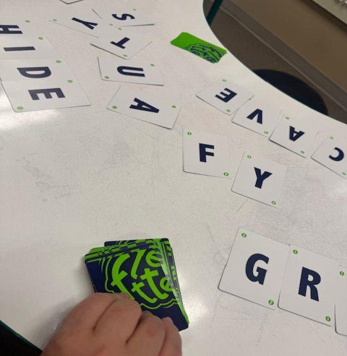
Phonics Dominoes is also a favorite for students working on foundational reading skills. In my math intervention class, I use free online resources from Expeditions in Education, including their Digital Ranger Stations. Students especially enjoy the Engineering and Design Challenges, which are readily available and highly engaging. I love being able to share a National Park with my students while they design solutions to real-world problems.
As motivation, students earn a ticket for a monthly lottery for every lesson they pass. Journals, emoji magnets for lockers, and erasable pens are always the most popular prizes. Through games and challenges, students are more engaged, collaborate face-to-face, and continue to learn.
Keeping students engaged throughout the year can be challenging, which is why I also create monthly challenges.
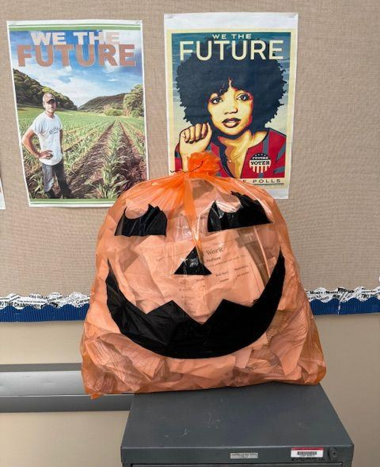
In my seventh grade study hall, we set a class challenge in October using a leaf bag. Each passed lesson allowed students to add half a sheet of recycled paper to the bag. The goal was to pass as many lessons as possible so we could fill the bag by Halloween. Students loved seeing how their individual efforts contributed to a shared goal and watching the bag grow fuller week by week.
In January, students who passed lessons colored in a piece of our 2026 New Year’s ball.
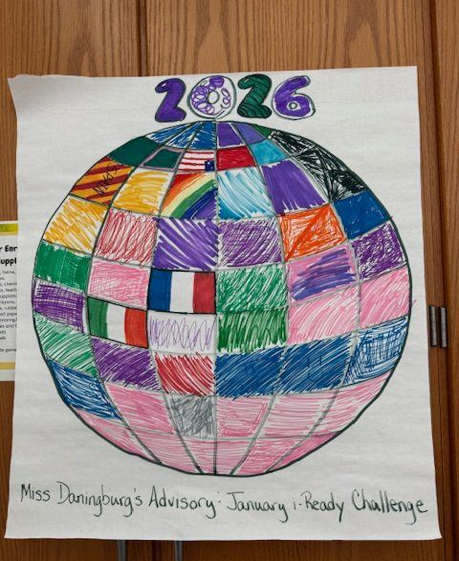
I love seeing how engaged my students are in these challenges—and how proud they feel of their contributions. One of the most powerful aspects of this approach is that every student works on their own area of need while still contributing equally. A student working on foundational reading skills in i‑Ready Pro sits alongside a peer working in Elevate Comprehension Lessons, and all of that work counts toward class privileges.
When larger groups meet their challenges, it unlocks shared privileges, such as choosing their own seats or earning a “free day” that feels a little out of the ordinary. To keep individual challenges interesting, I alternate between i‑Ready activities and other fun contests, like designing their own ugly sweater or writing as though they’re trapped in a snow globe. My intervention groups can also earn game days for demonstrating growth on their assessments and making progress toward their goals.
By giving students opportunities to contribute to the class community while also recognizing individual growth, we’re growing together. My students are more engaged, more confident, and have a stronger understanding of themselves as learners. They also build community through game days, which helps encourage academic risk-taking. As a result, students feel supported not only by me but also by one another.
It’s common to compare ourselves to those around us—especially in middle school. But through goal setting, celebrating passed lessons, and unlocking game days, my students begin to see themselves less as a score to compare and more as individuals on unique learning journeys. Whether we’re playing games, completing National Park challenges, or earning flexible seating, students stay actively engaged and motivated, working together, building community, and gaining confidence—all while learning. It’s a true win-win for my students and for me.
Subscribe to Our BlogWant to learn more about engaging middle schoolers? Download the Middle School Engagement Playbook or view our Middle School Topics page.
More Resources for You:
Middle School Student Engagement Strategies for Today's Classrooms
Sit, Slouch, or Stand: How Physical Comfort Relates to Learning
How i-Ready Pro’s Essential Lessons Transformed Learning in My Classroom
3-min. read

3-min. read

3-min. read