
Reducing Kindergarten Retention Rates: A District's Reading Turnaround
4-min. read
How one Texas district went from high kindergarten retention rates to 88% reading proficiency in just three years.
2-min. read
By: Alicia Alfonso

As teachers, we are often led by schedules. Everything has a specific time slot: math core time, science time, reading and writing time, and if you’re lucky, you have time set aside for intervention.
When I first began teaching, time management was hard, and if I’m being honest, I still struggle some days to fit it all in. Over time, however, I learned that learning doesn’t have to be divided. In the real world, we gain knowledge of the world around us through observation, questioning, and collaboration.
The same can be done inside the classroom. Why not incorporate subjects together? The real learning happens when subjects overlap—when math supports science and science gives math a purpose. Integrating STEM in the classroom helps make patterns, problem solving, and justification engaging and purposeful.
When I was a student teacher eight years ago, I volunteered at our school’s STEM Night. While I don’t remember much from all those years ago, I do remember that the event allowed families to experience learning together in a hands-on, exciting way.
I didn’t realize it then, but that night planted a seed in my heart as an educator. Years later, I brought the idea back to life and had the opportunity to plan and organize our school’s STEAM Night. I knew the stations needed to be fun for all ages—simple enough for prekindergarten students to enjoy the activities, but also engaging and challenging enough for older students to stay excited and involved. Adding the art component transformed STEM into STEAM by giving students opportunities to express creativity while applying math and science skills. Below are a few examples of the stations we created for families to enjoy.
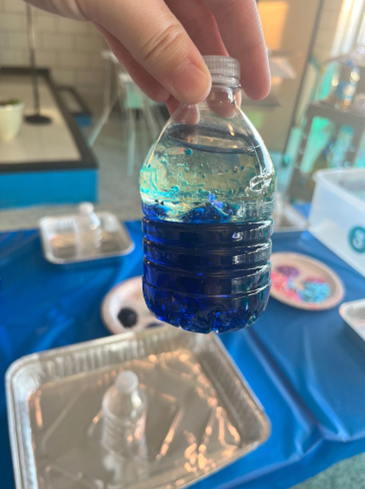
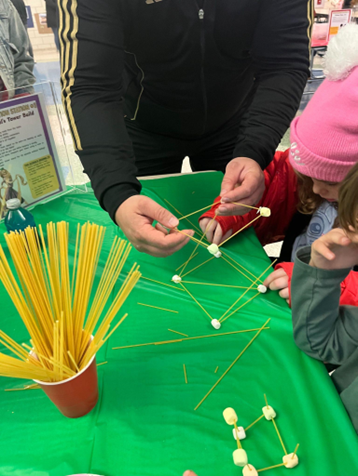
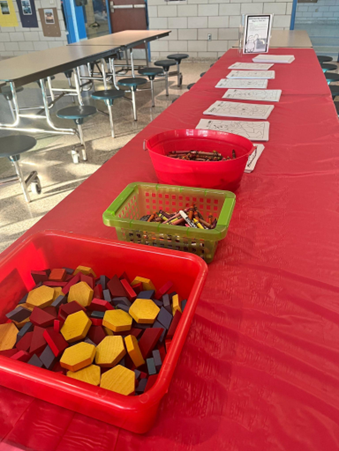
The night was a chance for students to shine as problem solvers and creators while building confidence as learners. It was such a rewarding moment in my teaching career to see it all come together.
You don’t need specialized materials or elaborate plans to integrate STEM into your classroom. Start small. Add measuring, equations, or anything with numbers to your science experiments. Help students build toward deeper conversations about why something works the way it does. Turn a math lesson into a design challenge if you’d like. Whether it’s designing, testing, revising, or reflecting, give students ownership and let them be in control. More importantly, don’t be afraid to get a little messy along the way.
Starting with these types of activities in grade school prepares students for jobs that don’t even exist yet. While we can’t predict what career they will pursue, we can help students build the skills they will always need: critical thinking, collaboration, creativity, adaptability, and problem solving.
Subscribe to Our BlogWant to learn more about integrating STEM into your classroom? Check out our core mathematics program i-Ready Classroom Mathematics.
More Resources for You:
Improving Mathematical Understanding: Giving Every Student a Voice
Make Mathematics about Meaning—Not Mnemonics—to Boost Math Scores
A Deeper Approach to Math Practice Adds Up to Big Results
4-min. read

3-min. read

3-min. read