Research-Based Instruction
i-Ready Efficacy Study Meets Evidence for ESSA’s Moderate Evidence
This research explores the impact of i-Ready on students in Grade 5 as it relates to the Massachusetts Comprehensive Assessment System (MCAS), Massachusetts' state testing system. Results for both mathematics and English language arts showed that even students who did not use i-Ready Personalized Instruction as recommended scored higher on the MCAS.
Explore the nuances of the data and the detailed conclusions of the report.
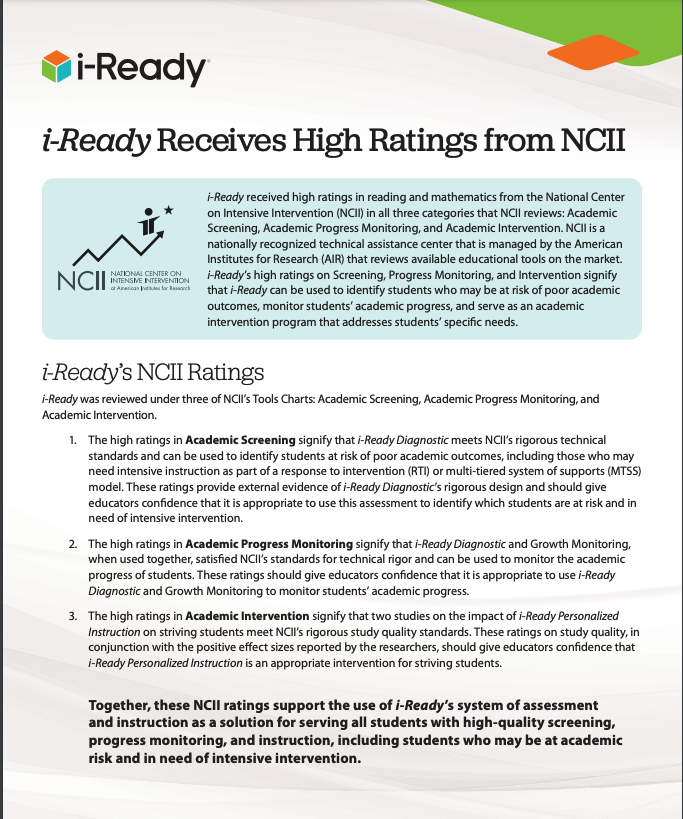
National Center on Intensive Intervention
National Center on Intensive Intervention's evaluation of i-Ready as an Academic Screening Tool and Progress Monitoring Tool
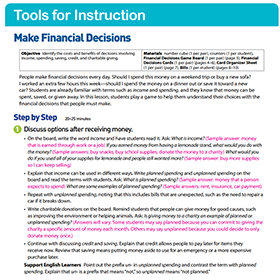
Tools for Instruction
Downloadable lesson plans, available in English and in Spanish. These lessons offer abundant opportunities for reading, writing, and speaking about texts.
i-Ready Stretch Growth® as a Path toward Proficiency
Across the United States, more students are below grade level in reading and mathematics now than before the COVID-19 pandemic. Given the impacts of the pandemic on reading and mathematics performance, average student growth will not be sufficient. Instead, students will need to demonstrate an increase in the rate of growth to “catch up” from unfinished learning, especially those students who were performing below grade level before the pandemic and experienced disproportionate levels of unfinished learning. How do we get more students back on track for grade-level proficiency? Report released November 2022.
Evidence to Support Historically Marginalized Student Groups
Curriculum Associates analyzed data from students in Grades K–5 who took the i-Ready Diagnostic during the 2020–2021 school year. This study also examined differences among historically marginalized student groups, including students of color, students with socioeconomic disadvantages, English Learners, and students with disabilities. In both Reading and Mathematics and across all grade levels, students using i-Ready with fidelity (i.e., a minimum of 30–49 minutes per subject per week for at least 18 weeks) and who received an overall Lesson Quiz pass rate of 70 percent scored significantly higher on the spring i-Ready Diagnostic than their counterparts who did not use i-Ready with fidelity. The results of this study suggest i-Ready can be an effective intervention for historically marginalized student groups.
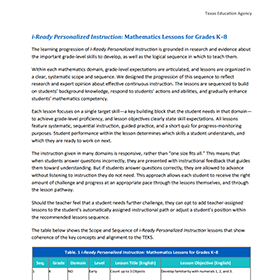
i-Ready Personalized Instruction Grades K–8 Mathematics Scope and Sequence: Coherence of the Key Concepts
i-Ready Personalized Instruction lessons show coherence of the key concepts and progression of learning across Grades K–8. The following scope and sequence shows how students build understanding on previously learned foundational skills. These lessons, along with the extra lessons that can be assigned by teachers, address the TEKS Focal Points.
Conceptual Understanding, Procedural Skill, Fluency, and Productive Struggle
Research on mathematics instruction provides a solid foundation of practices that help students gain proficiency. Curriculum for Grades K–8 that supports teachers in translating research and expert recommendations into practice can make significant headway in improving mathematics proficiency for all students.
i-Ready Personalized Instruction for Mathematics Research Base
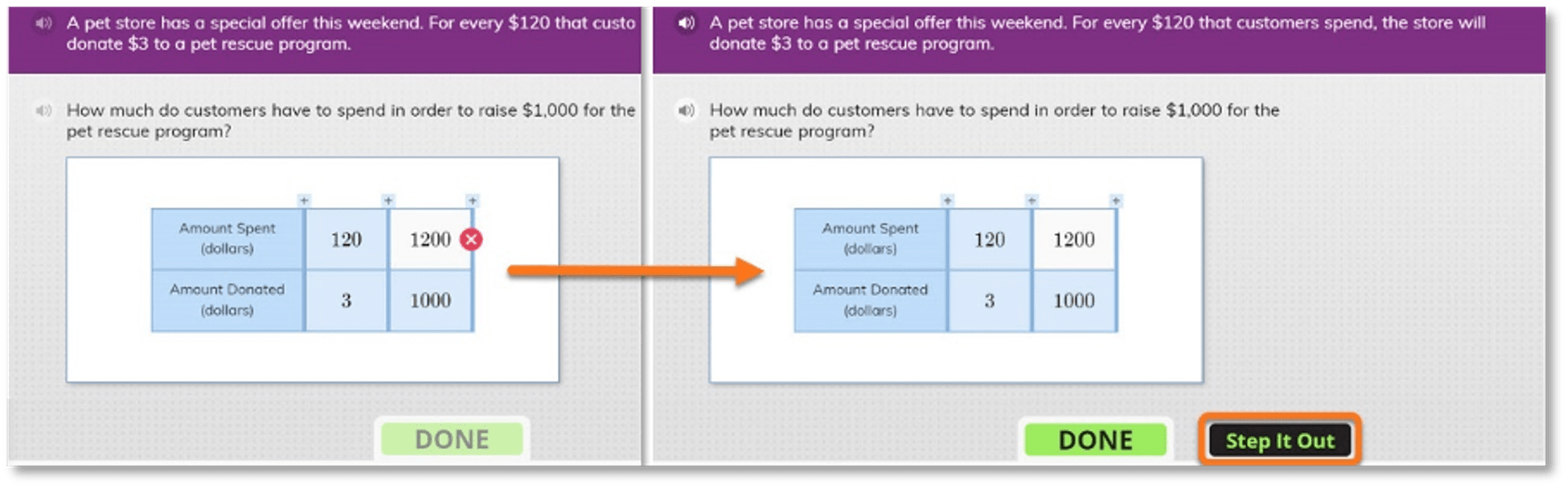
Additionally, this research includes evidence of how i-Ready Personalized Instruction encourages productive struggle without compromising rigor or content. This includes scaffolded instruction and our Step It Out feature (shown below in the Grade 6 examples).
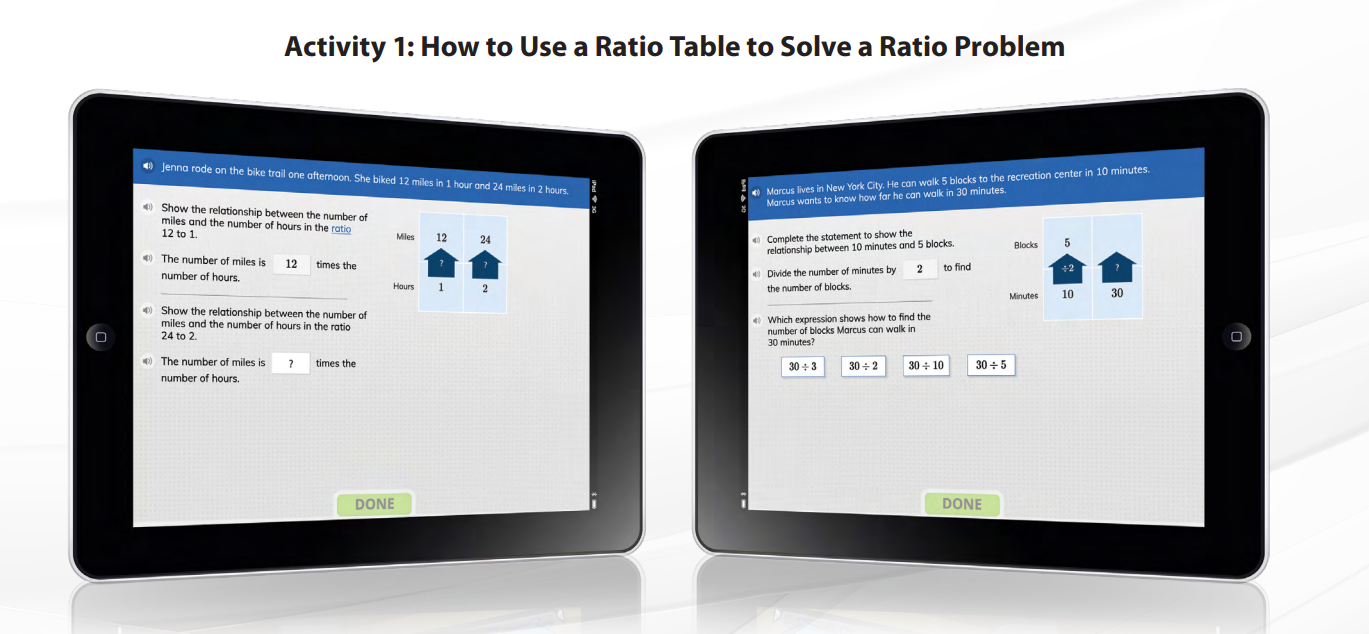
Also included with Personalized Instruction for Mathematics, Learning Games provide mathematics fluency and skills practice to develop internal motivation and encourage productive struggle.
To further illustrate conceptual and procedural balance across Grades K–8, see the images and descriptions of sample lessons and quizzes below.
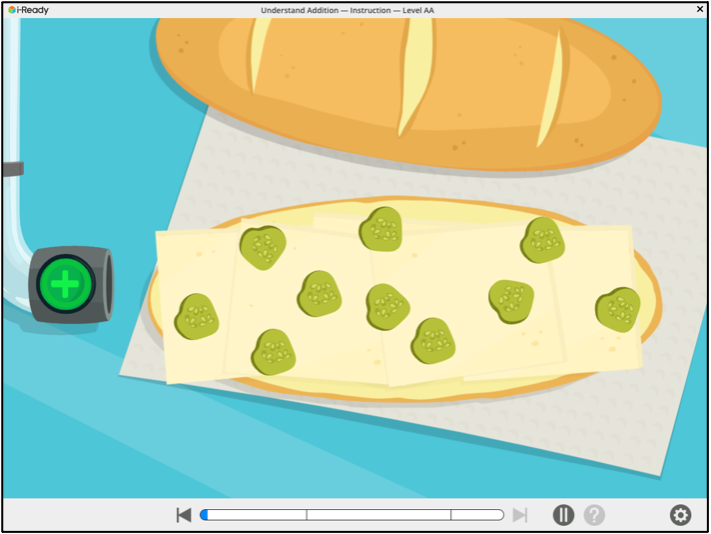
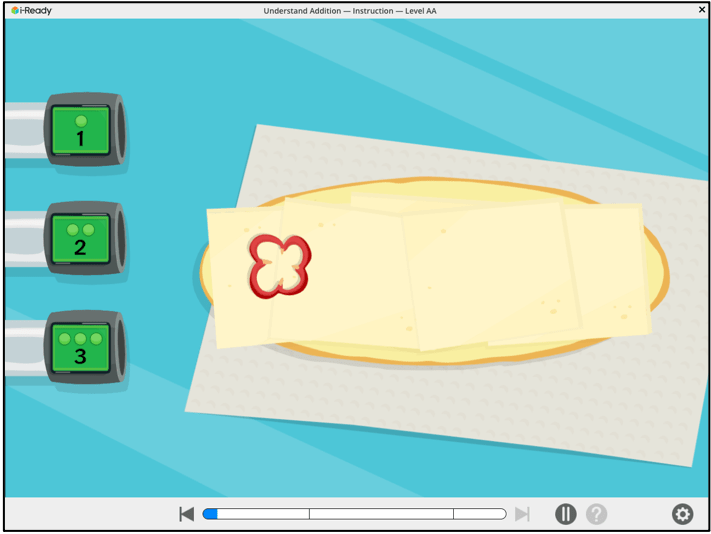
Figure 1. For example, in the Grade K lesson Understand Addition, students connect the meaning of new vocabulary terms with action and repetition. Every time students tap the plus sign, they hear “add” while they see a pickle slice added to the sandwich. When students choose how many pepper slices to add to the sandwich, they are encouraged to say “add” aloud with the lesson character.
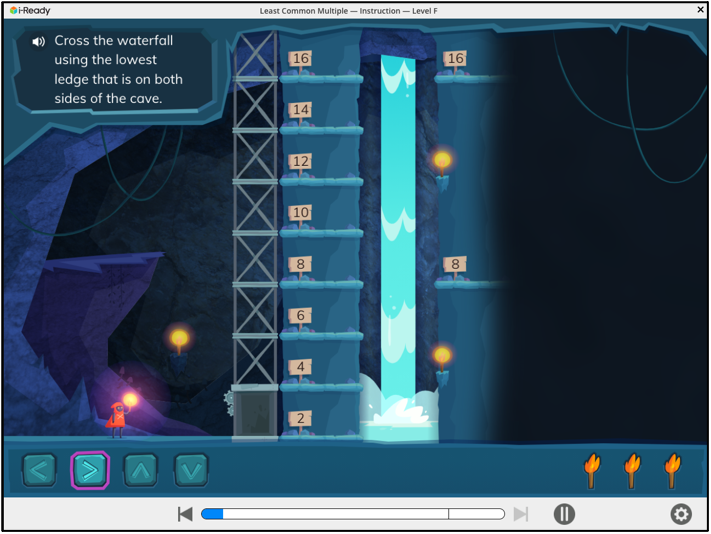
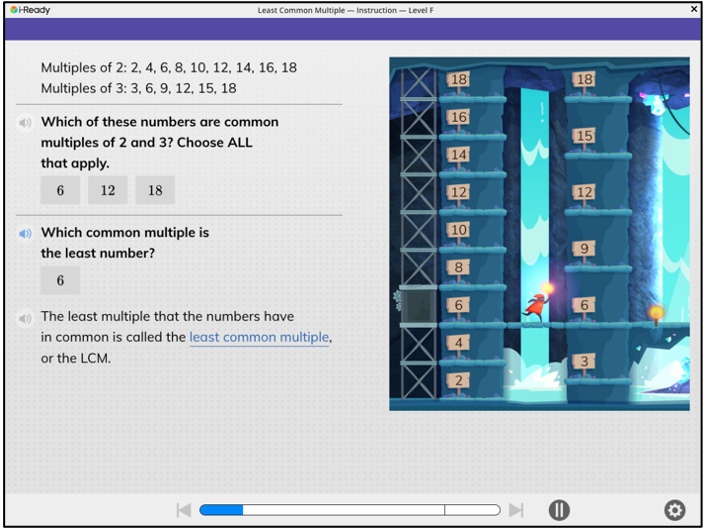
Figure 2. Another example is our Grade 6 lesson Least Common Multiple (LCM), which begins with a three-question exploratory activity meant to activate prior knowledge and reinforce understanding of the terms multiples and common multiples from Grade 5. As students discover that they need to find the lowest ledge that is a multiple of both numbers to successfully cross the waterfall, they are actively building meaning of this related concept and the new vocabulary term. After students complete this exploratory activity, the term "least common multiple" is formally defined.
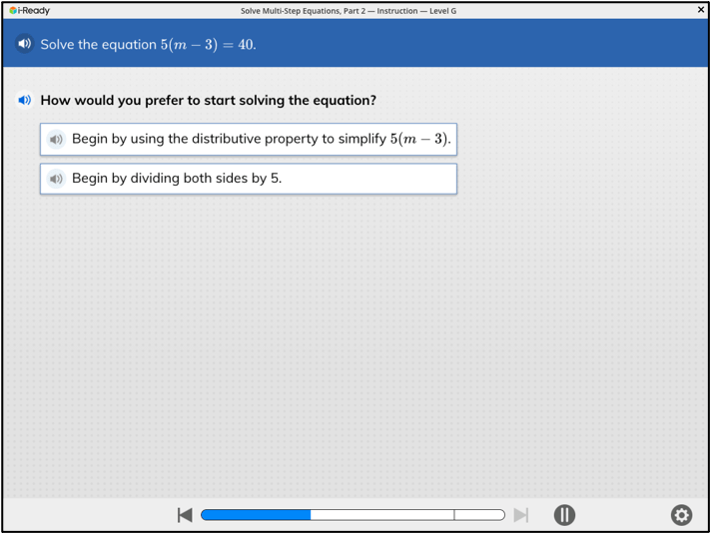
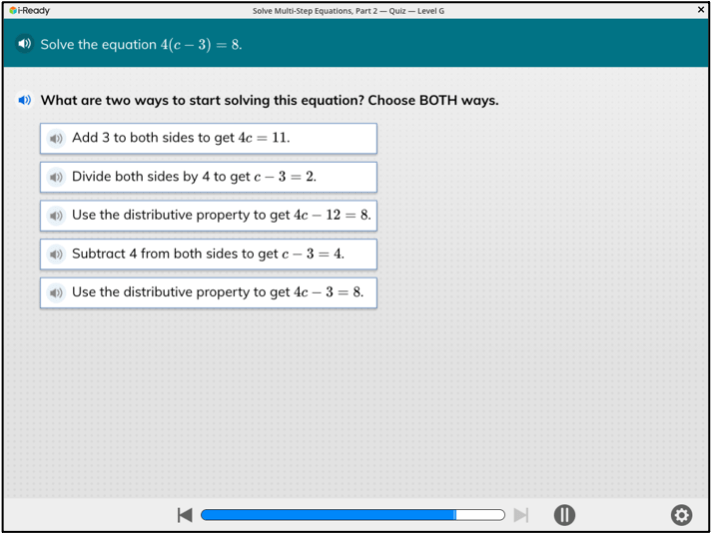
Figure 3. In Grade 7 Solve Multi-Step Equations, Part 2, students are provided with different options for starting the problem. They are then assessed on their recognition of valid approaches on the quiz.
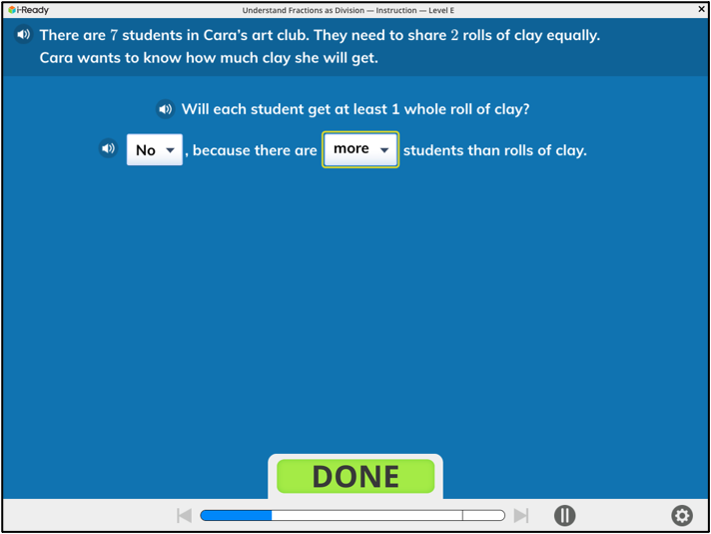
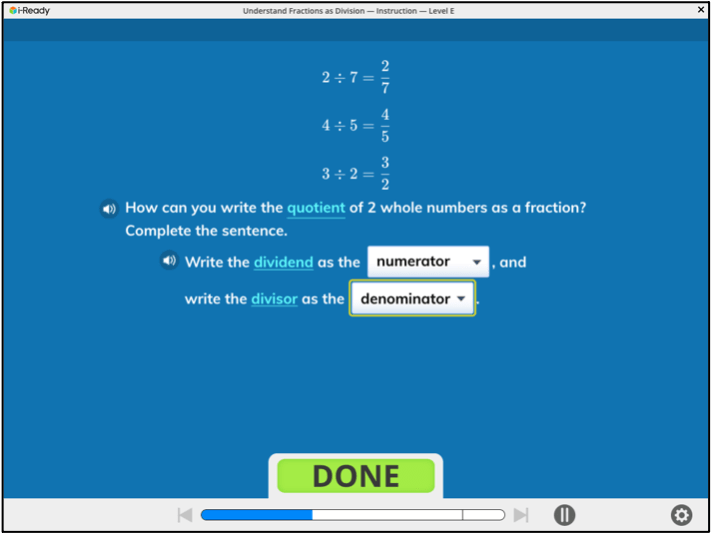
Figure 4. i-Ready Personalized Instruction for Mathematics provides opportunities for students to justify answers and explain reasoning by identifying appropriate rationales or completing cloze sentences. In addition, appropriate reasoning is modeled for students in task wrap-ups. For example, students justify answers to problem situations by using dropdown options to complete cloze sentences in Grade 5 Fractions as Division.
Contact Us
Thank you for visiting. Please reach out if you have any questions.

Claudia Salinas
CSalinas@cainc.com
(214) 519-3677
VP, Texas and English Learning
Curriculum Associates


Lexile® is trademark of MetaMetrics, Inc., and is registered in the United States and abroad. Copyright ©2022 MetaMetrics, Inc. All rights reserved.